
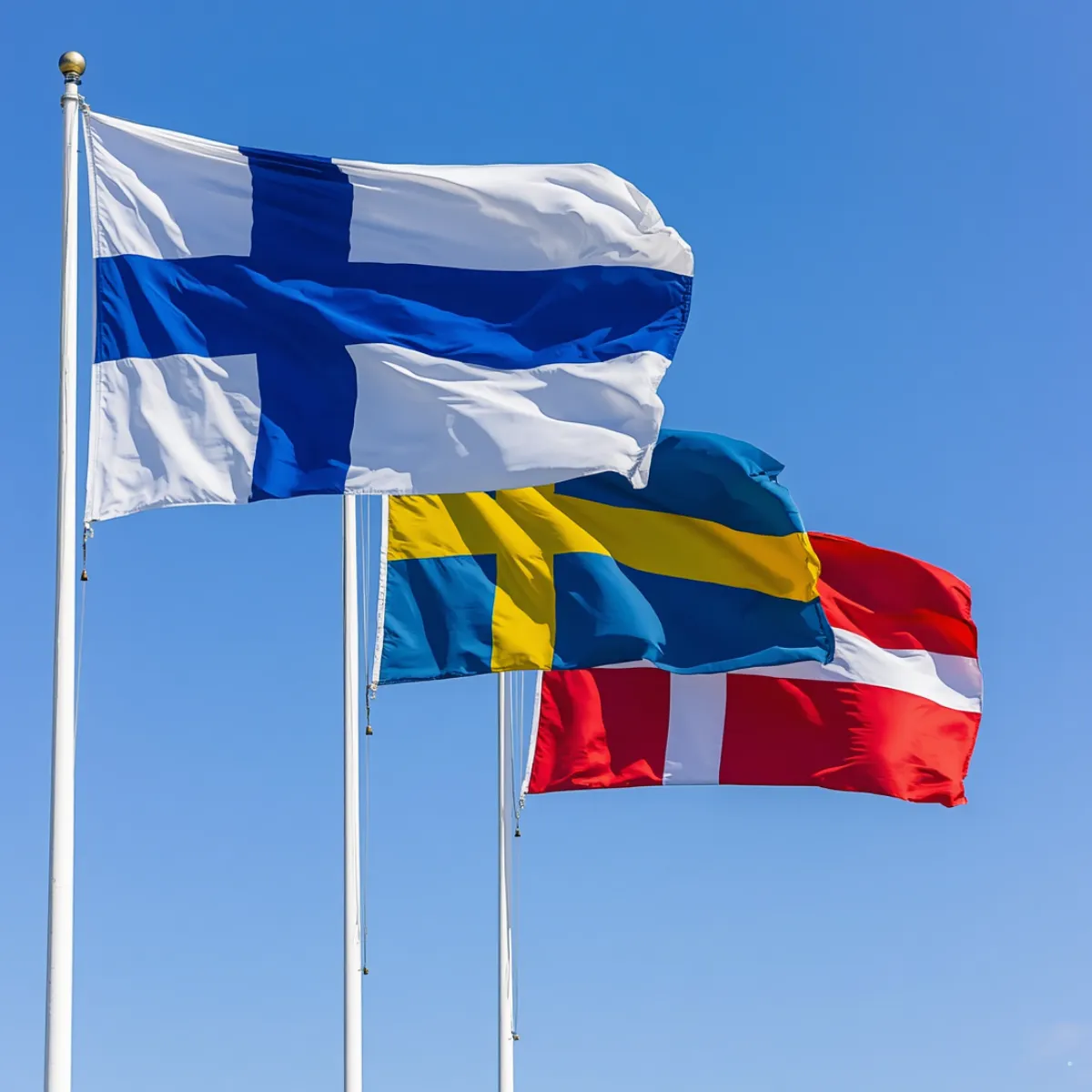
Employer of Record in Sweden, Denmark and Finland: Similarities and differences
Expanding into the Nordics is attractive for many international companies. Sweden, Denmark and Finland offer a highly educated workforce, stable economies and strong innovation ecosystems.
At the same time, hiring staff in these countries means having to navigate complex labor law, payroll, tax rules and local compliance requirements. An Employer of Record (EOR) can be the fastest and safest way to establish yourself in the Nordic market without having to set up a local company.
Although the EOR model works in a similar way in Sweden, Denmark and Finland, there are important differences that foreign employers should be aware of before hiring.
This guide explains the key similarities and differences between using an Employer of Record in Sweden, Denmark and Finland.
What is an Employer of Record?
An Employer of Record (EOR) is a local company that legally employs staff on behalf of another company.
The EOR partner becomes the employee’s legal employer and is responsible for:
Employment contracts
Payroll administration
Tax withholding
Employer and social security contributions
Pension administration
HR compliance
Reporting to authorities
Compliance with labour law rules
At the same time, the client company retains full control over the employee’s day-to-day work, responsibilities and performance.
For foreign companies, an EOR makes it possible to hire staff without establishing a local subsidiary, branch, or your own employer registration.
What is similar in Sweden, Denmark and Finland?
Although each country has its own labour law rules, there are several common denominators.
1. Strong protection for employees
All three countries have extensive labour legislation aimed at protecting employees.
Employers must comply with rules regarding:
Working hours
Paid leave
Sickness absence
Notice periods
Discrimination
Working environment
Non-compliance can lead to fines, legal disputes and reputational damage.
An EOR ensures that employment contracts and HR processes follow local rules from day one.
2. Mandatory employer reporting
In all Nordic countries, employers must regularly report salaries, taxes and employment details to the authorities.
These reporting requirements are often unfamiliar to foreign companies.
An EOR handles all reporting and communication with the relevant authorities.
3. Payroll and tax withholding
Employers in Sweden, Denmark and Finland must:
Withhold tax from salaries
Report salary payments
Pay employer contributions and social security contributions
Maintain accurate payroll records
An EOR manages the entire payroll process and ensures that payments are made correctly and on time.
4. Support with work permits
For employees from countries outside the EU, a local employer is often required to obtain a work permit.
A Nordic EOR can act as the legal employer and help with:
Work permit applications
Employment documentation
Immigration-related compliance
Ongoing permit administration
This is one of the most common reasons international companies use EOR services in the Nordics.
5. No local legal entity required
Perhaps the biggest advantage is that an EOR makes it possible to hire quickly without having to:
Register a company
Set up a branch
Register as an employer
Handle local payroll and tax registrations
This significantly reduces both administration and time to establish.
Sweden – the Nordics’ most regulated labour market
Sweden offers access to a highly educated workforce and a strong tech sector, but is also the most regulated labour market of the three countries.
Key characteristics
High employer contributions
Swedish employer contributions are among the highest in Europe and today exceed 30 per cent of gross salary.
These contributions fund, among other things:
State pensions
Healthcare
Social insurance
Parental insurance
Other welfare systems
Many foreign companies underestimate the true cost of hiring in Sweden.
Collective agreements
One of Sweden’s most unique features is the importance of collective agreements.
Collective agreements often regulate:
Salary levels
Occupational pensions
Insurance
Working hours
Notice periods
Overtime compensation
Unlike many other countries, Sweden has no statutory minimum wage. Instead, collective agreements often function as the practical standard for pay levels.
Strong employment protection
Swedish labour law provides extensive protection against dismissal.
A dismissal usually requires:
Objective grounds
Proper documentation
Compliance with statutory processes
Incorrectly handled dismissals can entail significant legal risks.
When is an EOR particularly useful in Sweden?
An EOR is particularly valuable when companies:
Want to test the Swedish market
Want to hire a remote employee
Recruit specialists
Need to sponsor work permits
Want to avoid registering a Swedish company
Denmark – flexible labour market with unique payroll requirements
Denmark is often described as a labour market characterised by “flexicurity”.
This means that employers generally have greater flexibility in hiring and termination than in Sweden, while employees have a strong social safety net.
Key characteristics
Easier to hire and terminate employment
Compared with Sweden, Danish employment conditions are generally more flexible.
This makes Denmark attractive for companies that want to build teams quickly.
However, flexibility does not mean fewer compliance requirements.
CPR registration
People who work in Denmark usually need:
CPR number
Tax registration
Danish tax card
Without correct registration, legal employment is difficult to carry out.
An EOR manages this process for the employee.
The Feriepenge system
One of the most distinctive parts of Danish labour law is the Feriepenge system.
Holiday pay is accrued during employment and managed through a separate system for holiday payments.
Many foreign employers find the system complex.
An EOR ensures:
Correct accrual
Correct reporting
Compliance with Danish holiday rules
ATP pension
Employers must pay into ATP, Denmark’s labour market pension.
Additional pension requirements may apply depending on the industry and employment terms.
When is an EOR particularly useful in Denmark?
An EOR is often the best solution when companies:
Establish in Denmark for the first time
Need to hire quickly
Build distributed or remote-based teams
Run project-based operations
Hire international specialists
Finland – structured labour market with extensive employer responsibilities
Finland combines a highly educated workforce with a structured labour market.
The Finnish labour market is predictable and transparent, but employers also have extensive obligations.
Key characteristics
The TyEL pension system
All employers must be affiliated with Finland’s statutory earnings-related pension system, TyEL.
The employer is responsible for:
Registration
Pension contributions
Ongoing reporting
An EOR handles these obligations automatically.
Statutory insurances
Finnish employers usually must take out:
Pension insurance
Accident insurance
Unemployment insurance
Occupational healthcare
These requirements are often more extensive than foreign companies expect.
Clear rules on workforce classification
Finland places great emphasis on correctly distinguishing between employees and self-employed individuals.
Misclassification can lead to:
Retroactive taxes
Pension liabilities
Sanctions
An EOR eliminates this risk by ensuring that staff are employed in accordance with local rules.
Work permit-related requirements
For many international hires, employment with a Finnish employer is required to obtain a work permit.
This makes EOR solutions particularly attractive for international recruitment.
When is an EOR particularly useful in Finland?
Many companies use an EOR when they:
Expand to Finland without a local legal entity
Recruit engineers or technical specialists
Run shorter projects
Recruit international talent
Build Nordic teams
Comparison of EOR in Sweden, Denmark and Finland
Area | Sweden | Denmark | Finland |
Labour market flexibility | Lower | Higher | Medium |
Employer contributions | Highest | Lowest | Medium |
Collective agreements | Very important | Important in some sectors | Common in many industries |
Pension system | Occupational pensions + social contributions | ATP | TyEL |
Holiday management | Traditional holiday system | Feriepenge | The Annual Holidays Act |
Support with work permits | Common use case | Common use case | Common use case |
Requires a local legal entity? | No | No | No |
Suitable for market testing? | Yes | Yes | Yes |
Which Nordic country is easiest to hire in?
The answer depends on the company’s goals.
Sweden offers access to one of Europe’s strongest talent markets but also has extensive labour law rules.
Denmark offers greater flexibility and relatively low employer contributions, but requires an understanding of systems such as Feriepenge and ATP.
Finland offers a predictable regulatory framework and highly skilled labour, but employers must manage extensive pension and insurance obligations.
For most foreign companies, the easiest solution is to partner with an experienced Nordic Employer of Record that understands the regulations in all three countries.
What foreign companies should remember
Sweden, Denmark and Finland are all attractive markets for international expansion, but each country has its own rules and requirements around hiring, payroll and compliance.
By using an Employer of Record, companies can hire quickly, ensure compliance and avoid the cost and administration that comes with establishing local legal entities.
The similarities between the countries make the Nordics attractive for regional expansion, while the differences show the importance of local expertise.
Whether you are hiring your first employee in Stockholm, building a team in Copenhagen or expanding operations to Helsinki, an EOR can offer a fast, compliant and scalable route into the Nordic market.